



In 2016, I took on my first client with a history of childhood sexual abuse in an astrology reading session. She had the same birthday as me, except she was a few years older. The session was meant to be a career-focused astrology consultation—she was going through her second divorce, from a man she’d met in a spiritual growth workshop.
I had prepared her chart and was ready to offer professional guidance for the year ahead. But a strong intuition told me there was something more important in her chart. Still, I knew that as a practitioner, I couldn’t cross the client’s stated boundaries without explicit consent. My awareness is useful for myself, but applied to others, it risks becoming projection or judgment. I’ve always been cautious about this—perhaps overly so.
Before she arrived to our session began, I was preparing the Osho Zen Tarot deck to supplement the chart reading. Just as I shuffled the cards, one flew out of my hand and went down the stairs. I rushed to retrieve it. It was the “Celebration” card—three women dancing in the rain. One just could not ignore signals something like that.
During our session, I learned she worked in women’s intimate care and had met her soon-to-be-ex-husband in a Tantra retreat. I asked myself: if I had the confidence, would I speak frankly about what I saw in her chart, regardless of my own concerns about neutrality or projections?
Astrology isn’t a passive or receptive approach like craniosacral therapy, and I can be wrong at times. But with that card in my hand, I trusted that my desire to support another woman would guide me. In the final fifteen minutes of the session, I carefully picked my words to ask how she had entered her current profession and built that into a small business.
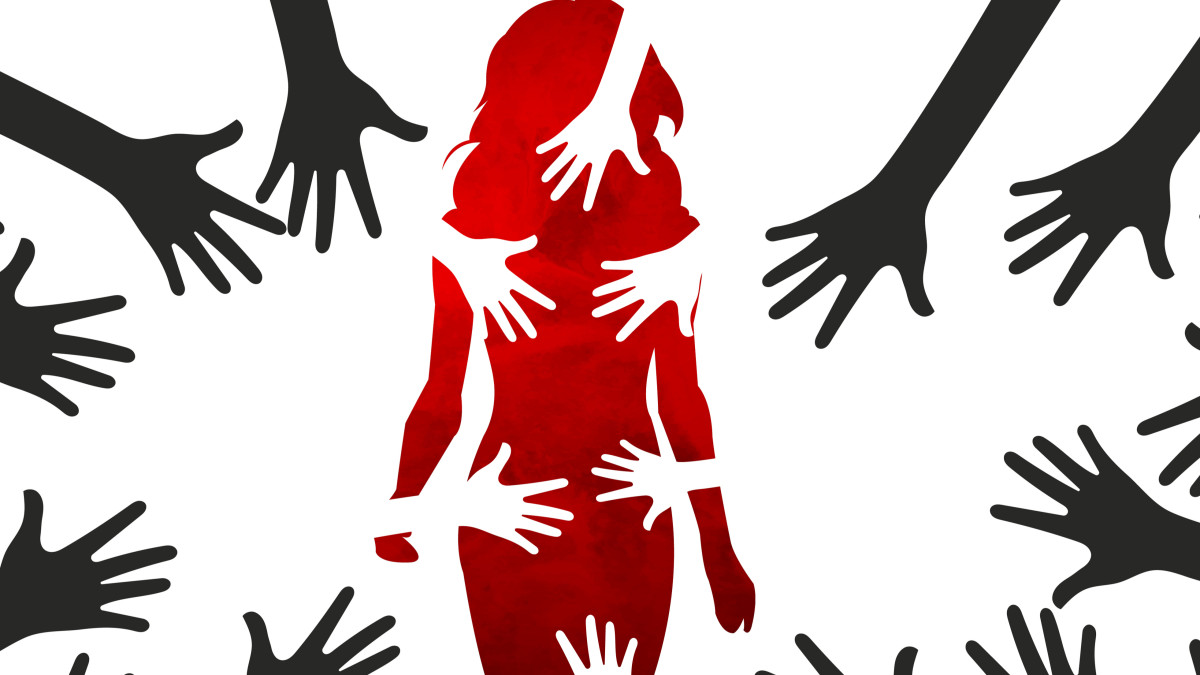
She told me she had been sexually abused as a child. Later, ordered by her family to help pay off her brother’s gambling debts, she turned to sex work—it was a natural arrangement saw by her family, given their preference for sons.
I don’t know how I had stayed present and calm through her story. It wasn’t just a story—it was her lived reality. I wasn’t as experienced then, and I went nearly an hour over time. But I never regretted asking that final question. She kept that Zen tarot card as her phone wallpaper for months afterward. I knew the session had supported her.
That experience planted a seed for my eventual shift in work.

Over the years, I encountered more women like her—some became clients, others work partners. I came to understand that sexual abuse doesn’t just take away a woman’s sense of purity; it strips away her fundamental sense of worth. The worst cases usually involve abuse by a parent—not only is basic worth destroyed, but trust in life itself is shattered. Values become distorted. No matter how hard she tries to learn and grow, she may unconsciously believe that any therapist knows better than she does, leaving her vulnerable to inappropriate or even invasive treatments.
This isn’t limited to sexual abuse. Severe physical abuse in childhood can create similar boundary and self-worth issues. And because of this trauma-shaped energetic structure, those affected are more likely to attract unsuitable authority figures into their lives—teachers, therapists, partners, bosses—who may unconsciously repeat the original wounding pattern. It may not be physical violation, but energetic or psychological violation can be just as damaging.
These boundaries require delicate handling. Otherwise, re-traumatization can occur on multiple levels.
One of my Tantra teachers, Deva Homa, works with deep care and respect. Her high-level energy attunement and meditative humility give her excellent discernment—free from ego and projection—so she can decide precisely when to intervene and when not to.
I once saw her choose not to intervene with a Chinese couple. The wife cried uncontrollably during a breathwork session, unable to explain her trigger, while her anxious husband asked me why no one was helping. That evening, I sat with them and talked things through, easing their concerns.
Another time, I saw Homa choose to intervene with an Israeli male participant, facing public questioning. She admitted intervention was always a risk, hoping to help a participant cross a core inner pattern. She asked the entire class, “Is anyone still angry with me?” I was deeply moved. To me, this is the true state of a healer: authentic and open.
Knowing when to act and when to hold back requires immense humility and awareness. And awareness isn’t spiritual entitlement—it’s genuine acceptance and seeing clearly.
For those who want to go deeper—to explore relationships, find direction, or reclaim your life—there are ways to begin. If you carry a history of abuse and the perpetrator was female, I recommend starting with a male practitioner, or with inner-child work. The path is not easy, but it is possible. And you deserve to walk it with someone who sees you clearly—and respects your boundaries.
